Why the Best View of the Colosseum Isn’t From Inside
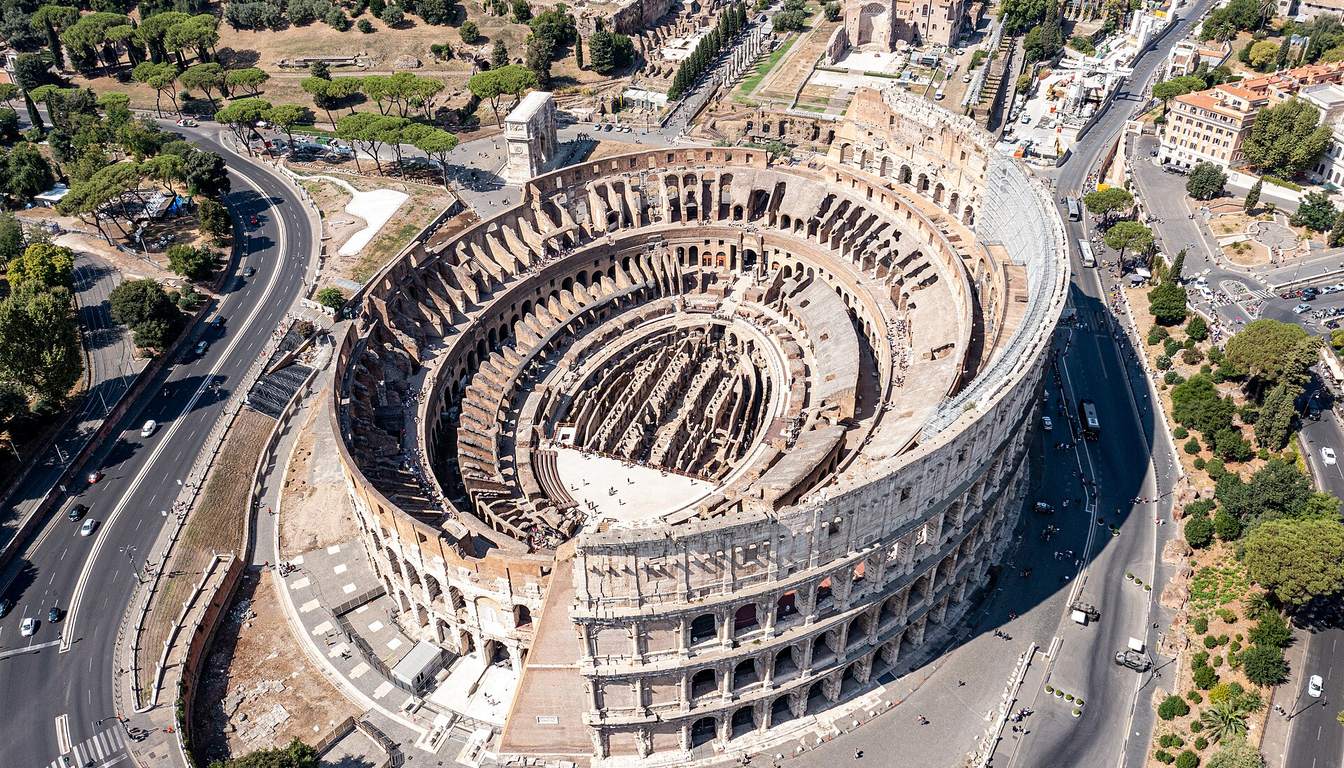
Most travelers assume that experiencing the Colosseum means stepping inside its ancient walls and standing on the arena floor where gladiators once fought. While the interior offers valuable historical immersion, the most complete and photogenic views of the Colosseum actually come from elevated exterior viewpoints that reveal its full elliptical shape and urban context. The classic panoramic perspective you see in postcards and travel guides isn’t captured from within the amphitheater—it’s photographed from carefully chosen vantage points around the monument.
Understanding where and when to find the best exterior viewpoints transforms how you approach this 2,000-year-old landmark. Arrive at Colle Oppio at sunrise for clean light on the arches, then book interior entry for 10am to avoid crowds. That’s the sequence that delivers both the iconic exterior shots and the interior historical experience without wasting time in bad light or long lines.
The Problem with Inside Views: What You’re Actually Missing
When you stand on the arena floor, you see rubble and partial walls, not the full elliptical shape. The Colosseum draws 7+ million annual visitors, making entry lines a real logistical challenge, but even once you’re inside, the grandeur is fundamentally designed to be appreciated from outside as much as from within. When you’re positioned inside the monument, your sightlines are blocked by walls, scaffolding, and other visitors packed into narrow corridors.
The surrounding historical context disappears entirely when you’re inside. You lose sight of how the amphitheater sits in relation to the Roman Forum, Palatine Hill, and the broader cityscape that has grown around it over two millennia.
Inside visits offer crucial historical immersion—you can stand where crowds once roared and imagine the spectacles that unfolded here—but they fundamentally lack the postcard-worthy panoramic perspective most travelers expect when they picture the Colosseum.
Even special access to restricted areas like the arena floor or upper tiers, while providing unique interior perspectives, cannot replicate the experience of seeing the monument’s complete elliptical outline against Rome’s skyline. You’re inside the story rather than seeing the whole book cover, and for many visitors, that wider context is what creates the most memorable visual impact.
Why Elevated Exterior Viewpoints Win: The Full Picture Advantage
Colle Oppio sits 300 meters north. From there, you see all three arch tiers at once. The full elliptical form becomes clear in a way it never does from ground level inside the monument, where walls dominate your sightlines and perspective is compressed.
External viewpoints provide essential urban and historical context that defines what makes this monument worth visiting. You see how the amphitheater anchors a landscape of ancient ruins, how it relates spatially to the Arch of Constantine and the Forum, and how modern Rome has built itself around this enduring centerpiece. Photography from elevated exteriors captures the monument’s scale, symmetry, and relationship to its surroundings—elements impossible to frame from interior corridors or even from the upper tiers looking inward.
Colle Oppio is genuinely free and excellent; skip the ticketed interior unless you want to see arena-floor construction details. You get flexibility to explore angles and lighting conditions without the time constraints of a ticketed entry slot. The building was designed so traders and residents entering Rome from the southeast would see it first, signaling the empire’s wealth.
Colle Oppio is genuinely free and excellent; skip the ticketed interior unless you want to see arena-floor construction details.
This exterior-first approach also reveals how the monument changes with light and time of day. Golden hour (6:45–7:15pm in June) backlights the west façade; bring a zoom lens to isolate the arches. These are exterior phenomena that define the Colosseum’s visual character more than any single interior detail.
Top Exterior Viewpoints Around the Colosseum
The Palatine Hill belvedere is widely regarded as the best elevated panoramic viewpoint for the Colosseum, offering sweeping views that place the amphitheater within its ancient urban context alongside the Roman Forum. Stand at the Palatine belvedere’s central terrace, facing northwest. You’ll frame the Colosseum with the Forum in the immediate foreground—perfect for showing scale. The elevation provides the perfect balance between proximity and perspective—close enough to appreciate architectural detail, distant enough to capture the complete silhouette.
 Photo: Michael Wilson from York, United Kingdom / Wikimedia Commons, CC BY 2.0 (cropped)
Colle Oppio, or Oppian Hill park, provides a public green space with multiple elevated terraces showing the Colosseum’s northern façade and full elliptical outline. This park is accessible throughout the day without restrictions and offers varied viewpoints as you move along its paths.
The sun hits the east-facing arches around 7am, creating hard-edged shadows that pop in photos. The park stays shadowed so you won’t squint.
The Arch of Constantine area and Via Nicola Salvi deliver classic ground-level and slightly elevated angles close to the monument. While not as panoramic as the hilltop positions, these locations provide the archetypal postcard composition that frames the Colosseum against the sky with the triumphal arch in the foreground. This is where many professional photographers position themselves during golden hour to capture the monument’s most recognizable profile.
The Vittoriano terrace offers a distant but dramatic perspective that places the Colosseum within Rome’s broader skyline. From this vantage point atop the Vittoriano, you see the amphitheater in urban context, surrounded by the city’s domes, rooftops, and greenery. While too far for detailed architectural photography, this viewpoint emphasizes scale and setting in a way closer positions cannot.
Each viewpoint delivers different angles and lighting conditions throughout the day. Morning light from the east favors positions along the Forum and Palatine, illuminating the monument’s western façade. Sunset works best from western viewpoints like certain terraces on Colle Oppio, where the sinking sun backlights the arches and creates dramatic silhouettes.
For a full multi-day plan in Rome, see First-time visitor’s guide to Rome in 4 days.
Timing Your Visit: When Exterior Light Transforms the View
Sunrise and the hour before and after sunset deliver the best natural light for exterior photography, casting soft, warm tones across the travertine façade and minimizing harsh shadows that flatten detail. Visit Colle Oppio 45 minutes before sunset for the clearest light. After 7:15pm, the floodlights kick in and the scene changes completely. The warm light enhances the texture of the ancient stone and creates depth through gentle gradations of shadow.
 Photo: Wilfredor / Wikimedia Commons, CC0 (cropped)
Blue hour lasts 12–18 minutes after sunset (depending on season). From Colle Oppio’s south terrace, the floodlights silhouette the arches sharply. The illuminated Colosseum is commonly cited as one of the most dramatic exterior views in Rome, with the artificial lighting designed to emphasize the monument’s architectural rhythm and highlight its layered arches. This is the moment when the ancient and modern merge most powerfully in a single visual frame.
Skip the Colosseum between 11am and 4pm. The overhead sun flattens the façade and creates blown-out whites on stone. Honestly, midday views are mediocre no matter where you stand. If it’s your only window, head to the Arch of Constantine and grab a quick reference shot; spend quality time elsewhere in Rome.
Early morning visits to elevated viewpoints also mean fewer crowds sharing the best vantage points. Popular spots like the Palatine belvedere and Colle Oppio terraces can fill with photographers and tourists during sunset golden hour, but arrive at sunrise and you’ll often have prime positions to yourself. The morning calm also means quieter streets and a more contemplative atmosphere around the ancient monuments.
Don’t skip the floodlit Colosseum at night. Plan a 30-minute stop on Colle Oppio after 8:30pm—it’s entirely different from daytime and worth the time. Unlike the shifting natural light of day, night views offer consistency and allow for longer observation without the pressure of a fleeting golden hour window.
For depth on a specific Rome site, see Vatican Museums morning or afternoon: which slot actually beats the crowds?.
Balancing Interior and Exterior: Getting Both Experiences Right
Arrive at Colle Oppio at sunrise for exterior shots, then book a timed interior slot for 11am so you dodge the worst crowds. These are complementary rather than competing experiences, and planning for both delivers a fuller understanding of what makes this monument remarkable.
 Photo: daryl_mitchell from Saskatoon, Saskatchewan, Canada / Wikimedia Commons, CC BY-SA 2.0 (cropped)
Special interior access to the arena floor and upper tiers offers unique perspectives that show construction details and provide unusual angles looking up or down through the monument’s layered structure. However, even these privileged interior vantage points still cannot replace the full-monument panorama available from external elevated positions. The arena floor lets you stand where gladiators entered; the upper tiers show sophisticated Roman engineering—but neither reveals the Colosseum’s complete form or its relationship to the surrounding city.
Start your day at Colle Oppio before 7am for golden light. Return to the Colosseum’s ticketed entry at 10am when light is flat and crowds are manageable. This separation allows you to focus on each experience without rushing or compromising either perspective. For similar comprehensive experiences at other landmarks, Pantheon access details offer understanding monuments from multiple angles.
Understanding what each type of view delivers helps set realistic expectations and avoid disappointment. If you enter the Colosseum expecting the sweeping panorama you’ve seen in photographs, you’ll be puzzled by the fragmented interior sightlines. Conversely, if you only view from outside, you’ll miss the tangible connection to history that comes from standing on ancient stones and imagining the roar of 50,000 spectators.
The interior is crowded and you feel herded. The exterior viewpoints let you control your pace and light, which is why they stick with travelers.
Common Misconceptions About Colosseum Viewpoints
Most guidebooks tell you to go inside. They’re wrong—the interior is a crowd and you can’t see the whole shape. The reality is more nuanced: interior views provide historical immersion and architectural detail, but the Roman Forum’s temple remains, the Arch of Titus, and modern neighborhoods built atop ancient streets become visible only from elevated exteriors. These aren’t competing truths—they’re different aspects of experiencing a complex historical monument.
Another common misconception is that you need paid access for a good view. Several strong exterior viewpoints are free and accessible from public areas around the monument, including much of Colle Oppio park, various street-level positions near the Arch of Constantine, and some perspectives from public sidewalks encircling the site.
Many travelers conflate photo angle with sightseeing experience, assuming that what looks good in a frame necessarily delivers the best on-the-ground encounter. The interior tour takes 90 minutes and feels crowded. The exterior viewpoints give you the iconic shots in 20 minutes if you know which spots to use. A dramatic sunset panorama from Palatine Hill serves different goals than standing on the arena floor imagining ancient spectacles—recognizing this distinction helps you plan appropriately for what you actually want from your visit.
The exterior viewpoints give you the iconic shots in 20 minutes if you know which spots to use.
Don’t skip the floodlit Colosseum at night. Plan a 30-minute stop on Colle Oppio after 8:30pm—it’s entirely different from daytime and worth the time. The floodlit façade, the contrast with the dark sky, and the romantic urban atmosphere combine to create something genuinely different from daytime views—not better or worse, but distinct and valuable in its own right.
Practical Tips for Maximizing Your Colosseum Viewing Strategy
Most tourists arrive at Colosseo station, which puts you at the worst viewpoint (ground level beside the monument). Get back out and walk 5 minutes north to Colle Oppio instead. The Colosseum area is served by this metro station, which functions as a natural starting point for exploring both interior and exterior perspectives. From here, you can walk to the Arch of Constantine, climb toward Palatine Hill, or head north into Colle Oppio park within minutes.
If you want a broad, unobstructed view, use elevated public viewpoints such as Colle Oppio or Palatine Hill rather than relying only on ground-level positions directly beside the monument. Ground-level positions create perspective distortion and rarely capture the full architectural form—the elevated angle is what produces the recognizable silhouette seen in professional photography and travel media.
Bring a zoom lens or use your phone’s telephoto mode to compress perspective and highlight architectural details from distance. This technique brings the Colosseum closer in the frame while maintaining the complete outline, and allows you to isolate specific arch sections or capture the interplay of light and shadow across the façade. A moderate telephoto perspective (equivalent to 70-135mm in traditional terms) often produces the most balanced and dramatic results from elevated viewpoints.
Expect popular viewpoints to be shared with other visitors, especially during golden hour and at illuminated night spots. The best vantage points are well-known, and you won’t be alone in seeking them out—but this shared experience is part of the appeal.
If mobility is limited, the Arch of Constantine area offers excellent views with minimal elevation change. You can access strong perspectives on the Colosseum’s full form without climbing hills or navigating stairs, making this ground-level zone particularly valuable for travelers with accessibility needs.
Understanding that the monument was designed as much for exterior impact as interior function helps travelers plan visits that capture both perspectives—the intimate historical experience within and the grand architectural statement visible from surrounding hills and viewpoints.
The strategic value of exterior viewpoints is recognized by cultural authorities who manage visitor experiences throughout Rome’s historic center. According to Turismo Roma, the official tourism portal for Rome’s cultural heritage sites, understanding the spatial relationship between monuments enhances appreciation of how ancient Rome functioned as an integrated urban landscape rather than isolated structures. This perspective reinforces why seeing the Colosseum in context—framed by surrounding ruins and modern cityscape—delivers more complete understanding than interior visits alone.
Travel resources consistently emphasize that Rome’s ancient monuments reward visitors who take time to observe from multiple angles and distances. Wikivoyage notes that the most rewarding Roman experiences often come from combining official site visits with exploration of nearby viewpoints that reveal how individual landmarks relate to the broader archaeological zone. The Colosseum exemplifies this principle: its architectural impact depends partly on its visual dominance over the surrounding Forum valley, something only visible from elevated external positions.
For travelers planning their Colosseum visit, the lesson is straightforward: allocate time for both experiences, but prioritize exterior viewpoints during optimal lighting conditions. The interior tour provides historical depth and physical connection to the past, while external vantage points deliver the iconic visual memory that defines this monument in collective imagination.