Montmartre & Sacré-Cœur Half-Day Route Without Wasted Walking
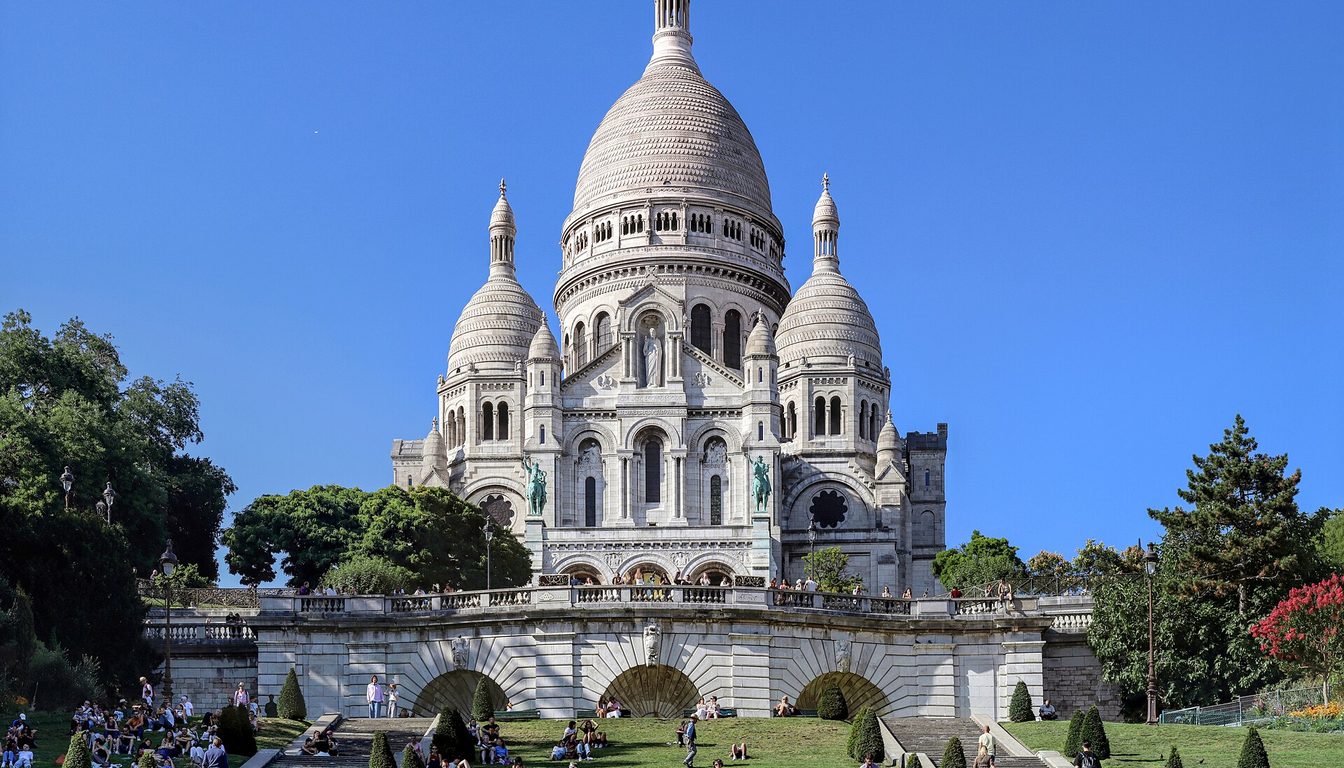
Plan a linear half-day route by taking the metro to Anvers, riding the funicular to Sacré-Cœur’s summit, visiting the basilica interior, looping through nearby Montmartre streets, then descending via stairs or a side street. This one-climb-one-loop structure eliminates wasted vertical travel and keeps you moving efficiently across the 18th arrondissement’s highest plateau.
Montmartre and Sacré-Cœur sit on Paris’s highest hill, and the single biggest time-sink is zigzagging up and down the steep streets. Montmartre’s narrow streets get congested by 10am; starting early is the only real way to move without getting stuck behind tour groups. This guide shows you how to build a clean, linear route that keeps you moving upward once, then loops the plateau before exiting—no wasted steps.
Why Montmartre and Sacré-Cœur work well in half a day
The Basilique du Sacré-Cœur is located at the top of Montmartre in Paris’s 18th arrondissement, concentrating the main sights within a small walkable area. The basilica itself is open daily from 6:30am to 10:30pm and admission is free.
No booking needed, no timed entry—you just show up and walk in.
Take the funicular or stairs up once, stay on the plateau the whole time, then descend once. That’s it. No backtracking. A focused half-day allows time for the basilica interior, forecourt views, and a short loop through nearby Montmartre streets without rushing or fragmenting your route with multiple descents and re-ascents.
| Stage | Method | Key Point | Time |
|---|---|---|---|
| Ascent | Funicular from Anvers station | 1 min 30 sec, standard metro fare | 5–10 min incl. wait |
| Basilica | Walk-in, free admission | Interior open 6:30am–10:30pm daily | 20–30 min |
| Neighborhood loop | Walking circuit (Place du Tertre, rue Norvins) | Stay on upper plateau, no re-climbing | 30–45 min |
| Descent | Stairs or side street exit | Avoids retracing funicular route | 10–15 min |
Starting point: which metro station saves the most walking
Anvers on line 2 puts you at the foot of the hill near Square Louise Michel and the funicular base, making it the fastest direct approach to the summit. If your priority is reaching Sacré-Cœur with minimal uphill effort, Anvers is the logical choice.
 Photo: Thesupermat / Wikimedia Commons, CC BY-SA 3.0 (cropped)
Abbesses on line 12 leaves you slightly lower in the neighborhood and requires extra uphill walking to reach the basilica. Abbesses costs you an extra 15 minutes of climbing for streets that aren’t worth it unless you’re staying in the neighborhood. For a half-day, Anvers is faster. Pick Abbesses only if you’re staying overnight in the neighborhood.
Avoid stations farther north or east like Lamarck–Caulaincourt or Château Rouge unless you’re extending the walk well beyond half a day. Those entries push you into longer loops that don’t align with a compact summit-and-loop itinerary.
Transport quick reference:
- Anvers (Line 2): Base of funicular; fastest direct approach to Sacré-Cœur summit.
- Abbesses (Line 12): Lower entry; requires extra uphill walking but starts near quieter residential streets.
- Funicular: 1 min 30 sec to summit; standard metro fare; recommended for time efficiency.
- Main staircase: Free; 5–10 minutes; use for descent to see different neighborhood angles.
- Avoid: Lamarck–Caulaincourt and Château Rouge; longer loops misaligned with half-day itinerary.
Costs at a glance:
- Basilica interior: No charge; admission is free and walk-in.
- Funicular (ascent or descent): Budget tier; standard metro fare applies.
- Dome visit (optional): Budget tier; adds 30–45 minutes and separate entry logistics.
- Café pauses in Place du Tertre: Mid-range tier; neighborhood cafés and restaurants cluster around the square.
For practical transit detail in Paris, see How to navigate Paris Metro and RER like a local.
Funicular vs. stairs: which one keeps you on schedule
The Montmartre funicular runs from the bottom near Square Louise Michel to the summit in about 1 minute 30 seconds. It is managed by RATP and operates as a regular transit link, not a tourist attraction—standard metro fare applies. The speed and energy savings make it the most efficient choice for the upward leg of your route.
The main staircase beside the funicular offers a free alternative and takes about 5–10 minutes, depending on pace and crowds. If you’re comfortable with the climb and want to avoid the funicular queue, the stairs work fine, but they do add time and physical effort to the front end of your visit.
For a half-day schedule, the funicular is the most practical choice upward. You can save the stairs for the descent if you want a quieter exit route that lets you see different angles of the neighborhood. Mobility-limited visitors can use the elevator access at the back of the basilica on 35 rue du Chevalier de la Barre, which bypasses the steep hill paths entirely.
Efficient route: basilica first, then the neighborhood loop
Arrive at the funicular base, ride to the top, and head straight to the basilica forecourt to secure your views before crowds build. From the forecourt at 9am, you get clear sightlines to the Seine and Montmartre’s cobblestone streets below without crowds blocking your vantage point.
Visit the basilica interior first—admission is free and the building is open all day, so there are no queuing logistics to manage. After the basilica, stay on the upper plateau and walk a compact loop. Place du Tertre, rue Norvins, and nearby artists’ streets form a natural circuit that keeps you moving horizontally rather than climbing and backtracking. If you’re looking for other efficient Paris routes that minimize wasted movement, the same principles apply at landmarks across the city.
Exit via a different descent point—either the stairs or a side street—to avoid retracing your funicular approach. This flow keeps you moving in one direction: up once, loop, then down. The structure eliminates the wasted time of climbing partway, descending to explore lower streets, then re-climbing to finish the basilica visit.
Dome visit: when it fits and when it doesn’t
Book the dome separately; it opens at 10am and closes at 7pm (last entry 6:30pm). It adds roughly 30–45 minutes to your schedule, including queue time and the climb to the observation level. If you’re working within a tight half-day window or want to keep the visit light, skip the dome and focus on the forecourt views—they’re nearly as panoramic and require no extra time or queue management.
If you do include the dome, visit it immediately after the basilica interior to avoid losing momentum in your route. Once you descend from the dome, you’re already positioned for the Montmartre loop without needing to backtrack. The dome visit is a modular add-on, which means you can decide on the day based on crowd conditions and your remaining time.
Timing the half-day: morning vs. afternoon trade-offs
Morning visits—8:00am to 12:00pm—offer cooler temperatures, softer light, and fewer crowds on the forecourt and in Place du Tertre. After 11am, Place du Tertre fills with tour groups.
If you’re chaining this visit with another Paris sight later in the day, starting at Montmartre in the morning keeps the rest of your schedule flexible.
Afternoon visits from 1:00pm to 5:00pm work if you’re coming from another attraction, but expect busier streets and longer waits at cafés. Skip afternoon visits unless you’re willing to wait 20+ minutes for a café seat. Morning is objectively better for this route.
Avoid starting after 3:00pm if you want to include the dome, since last entry is 6:30pm and you’ll feel rushed to complete the loop.
Avoid starting after 3:00pm if you want to include the dome, since last entry is 6:30pm and you’ll feel rushed to complete the loop.
The basilica itself is open all day, so the main constraint is your energy level and the neighborhood’s crowd rhythm, not access. If you prefer exploring Paris neighborhoods at a relaxed pace, morning timing gives you more breathing room.
Best time to visit:
- 8:00am–12:00pm (morning): Cooler, softer light, fewer crowds on forecourt and in Place du Tertre.
- 1:00pm–5:00pm (afternoon): Busier streets and café waits, but still manageable if crowd-tolerant.
- Avoid after 3:00pm if including the dome visit; last entry is 6:30pm.
- Basilica interior: Open all day (6:30am–10:30pm), no advance booking required.
Common mistakes that waste time on Montmartre routes
Climbing to the basilica, then descending to explore lower Montmartre, then re-climbing costs you an hour of wasted energy. Don’t do it—stay on the upper plateau once you reach the top.
Believing you need advance access or a reservation for the basilica interior is another common error. Entry is free and walk-in, so there are no booking logistics to manage. The only separate component is the dome, which has its own hours and access point but still doesn’t require advance planning unless you’re visiting during peak summer months.
The dome was added decades after the basilica opened, so they’re genuinely separate structures with different visitor flows. According to historical accounts, Sacré-Cœur’s construction spanned nearly four decades, beginning in 1875 and completing in 1914, with later consecration in 1919.
Using the funicular both ways when you could descend via stairs or a side street means you miss the chance to see quieter corners of the neighborhood. The funicular is a time-saver upward, but the descent offers opportunities to explore streets like rue Lepic or rue des Abbesses without the pressure of managing the climb.
Extending or shortening the route on the day
To shorten the visit, skip the dome, limit your Montmartre loop to Place du Tertre and one or two nearby streets, and exit via the funicular or stairs in under 2.5 hours. This compressed version still covers the basilica interior, the forecourt views, and a taste of the neighborhood without feeling rushed.
 Photo: Serge Melki from Indianapolis, USA / Wikimedia Commons, CC BY 2.0 (cropped)
To extend, add the dome, walk farther west into the quieter residential Montmartre streets, or pause for a longer café stop near Place des Abbesses. The modular structure—metro, ascent, basilica, loop, descent—makes it easy to adjust on the fly without losing the route’s logic. If mobility is a concern, use the elevator access at the back of the basilica and keep the walking loop very tight around the forecourt.
The flexibility built into this route means you can calibrate the visit to your energy level, crowd tolerance, and remaining schedule without needing to rethink the entire flow. Whether you finish in two hours or stretch to four, the core movement pattern stays the same: one climb, one plateau loop, one exit.
If you slow down and walk the side streets instead of heading straight to the basilica, you’ll find cheaper cafés and avoid the main crowds on Place du Tertre. According to Wikivoyage, the neighborhood benefits from that half-day rhythm—long enough to absorb the atmosphere without the fatigue that comes from over-extended urban walking.
France.fr notes that Sacré-Cœur remains one of the most-photographed monuments in Paris, drawing visitors year-round for both its architecture and panoramic city views. On a clear morning, you see the Eiffel Tower to the southwest, Notre-Dame directly south, and the Panthéon dome across the Seine—sightlines you won’t get from street level anywhere else in the city.
The compact geography of Montmartre makes it particularly suited to half-day exploration when compared to Paris’s more sprawling districts. Paris.fr highlights the neighborhood’s village-scale streets and squares, which remain navigable on foot without the need for intermediate metro hops or bus transfers. This self-contained character allows a linear, climb-once strategy to work efficiently, turning what could be a fragmented sightseeing effort into a coherent, low-friction loop.
For a full multi-day plan in Paris, see Best things to do in Paris in 3 days: a curated itinerary.
Frequently asked questions
Do I need to book the basilica in advance?
No. The Sacré-Cœur basilica interior is free admission and walk-in only—there are no booking logistics to manage. The dome is a separate visit with its own hours (10:00am–7:00pm) and does not require advance planning unless you’re visiting during peak summer months.
How long does the whole visit take?
A half-day visit (basilica interior, forecourt views, and a Montmartre neighborhood loop) takes 2–3 hours. Adding the dome climb extends it to 3–3.5 hours. You can shorten to under 2.5 hours by skipping the dome and limiting the loop to Place du Tertre and one or two nearby streets.
A half-day visit (basilica interior, forecourt views, and a Montmartre neighborhood loop) takes 2–3 hours.
Is the funicular worth it, or should I take the stairs?
The funicular (1 min 30 sec, standard metro fare) is the most efficient way up and saves energy for the plateau loop. Descend via the stairs or a side street to see quieter corners of the neighborhood—avoid using the funicular both ways, as it means missing streets like rue Lepic.
What’s the difference between the dome and basilica interior?
The basilica interior is free, open all day (6:30am–10:30pm), and requires no extra time. The dome is a separate visit with different hours (10:00am–7:00pm, last entry 6:30pm), adds 30–45 minutes including queue time, and offers observation-level city views—nearly as panoramic as the free forecourt views but requiring more time and money.